How to keep hiking throughout your pregnancy

  1. Share
0 0

How to keep hiking throughout your pregnancy by Vong Hamilton for Hike it Baby Deanna hiked 8 miles with a 1,000-feet-elevation gain at 35 weeks. We weren’t a mile into our hike midway up a steep, rocky incline when my chest started to tighten and I was short of breath. My heart was beating fast and I could feel a cold sweat coming on. I was with my kids, ages 8 and 3, and abruptly stopped and told them, “Guys, we have to go back. I don’t feel too good.” I was in my first trimester with my third and had terrible motion sickness (in fact, I had it the entire pregnancy).

Luckily, the symptoms were similar to what I’d experienced when I was 13 weeks pregnant with my second at 15,700 feet in elevation on top of Pichincha (a stratovolcano) in Quito, Ecuador, and had to sit on the ground, take deep breaths and calm myself enough to walk the few steps to a bench. My kids complained about cutting our hike short, but I knew I only had enough energy left to walk back down to the car. After that, I contemplated what had happened. I’d eaten before we left (and used the restroom!) and packed snacks for the trail. I didn’t try to go at a faster pace than my body would allow.

But still, what went so terribly wrong? The answer was simple: pregnancy is unpredictable. No matter where you’re at, you need to be self-aware at all times and listen to your body.

Hiking when pregnant

Being pregnant doesn't mean your time spent outdoors has to come to an end; keeping active during pregnancy is good for your and your baby’s health. Of course, your level of effort will have to adjust to accommodate each trimester, but with some extra preparation, you can continue enjoying your outdoor lifestyle while staying healthy. To help you stay safe and comfortable on trail, we’ve gathered some helpful tips from Hike it Baby moms who were determined not to let pregnancy stop them from hitting the trails.

Packing food, supplies & the rest

How to keep hiking throughout your pregnancy by Vong Hamilton for Hike it Baby
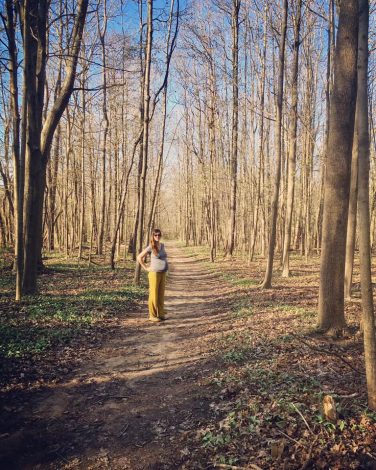
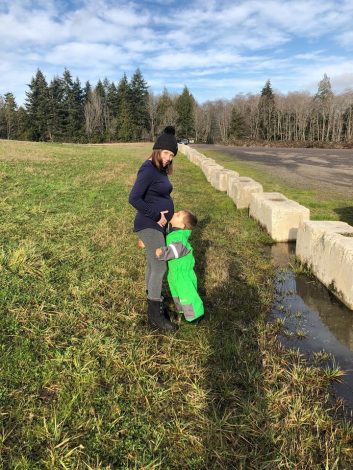
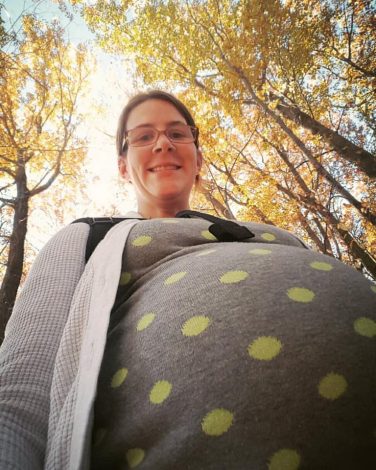
  • Elizabeth Ann advises pregnant women to use the restroom before starting a hike. "Use the bathroom before you start your hike ... like potty training toddler-style. Do a potty try because you know in ten minutes of hiking, you’ll have to go!" – Elizabeth Ann, Holland, MI
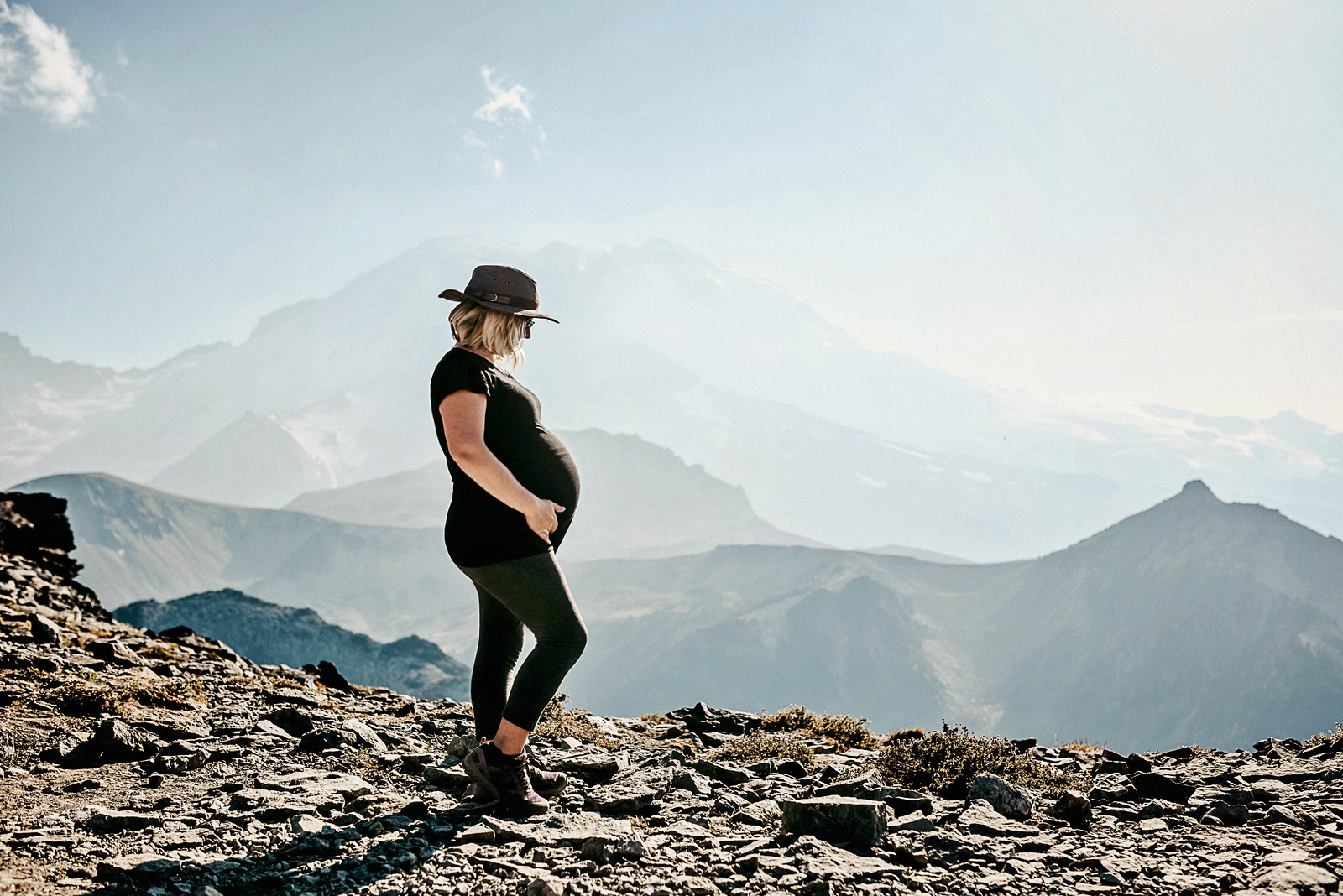
  • Bring lots of water and snacks and amazing friends who don't mind going at a slower pace with lots of breaks. I was 35 weeks and it was a 8-mile 1000 gain hike in this pic. Deanna, South Kind County, WA
  • End on a good note. Sometimes that means keeping it short and sweet. You should always end before you feel tired so you don't hit exhaustion while on the trail. A hip belt can help with pelvic stability, especially in 2nd+ pregnancies when everything is really loose. Eat a banana for electrolytes and potassium to prevent muscle cramps. A protein snack is also good to have in hand. Small packs of nuts, cheese or bars can easily be tucked into a pocket or pouch. Hide them everywhere so you're never caught without.  Jessica, Portland, OR
  • Hiking poles are helpful when body changes start to impact your balance, especially if you are also babywearing an older sibling or the terrain is rocky or uneven. Kathryn Clarke, Tucson, AZ 
  • Definitely a support belt! Brook, Cincinnati, OH
  • By 2nd trimester, maybe halfway through, any time I was on my feet for at least 15 minutes, I used a belly support band. It helped a TON with the lower back pain! I also drank a lot of water, took it slow and took breaks often and stretched. I used my trekking poles with any hike with elevation or rocky terrain during my 3rd trimester just to be sure my balance was good and help save my knees. And if I hiked at least a mile, I needed a nap that day. Rita Diane
  • Listen to your body, go slow and just enjoy being outdoors. Some days you can go far and some days it might be 20 minutes. – Sarah, Albuquerque, NM

Setting realistic goals

  • It was really important to me to keep our normal routine of getting outside every day for my daughter's sake. There were so many unknowns coming her way, but hiking could be her safe place of familiarity. Severe morning sickness and multiple times on modified bedrest made this challenging, but we made it work. We spent a lot of time in our back yard, did a lot more park and plays, and once I got too big to carry her comfortably, the stroller became our new best friend. The most important thing was listening to my body, going with the flow and reminding myself that spending time outside was what mattered. Vanessa, San Diego, CA How to keep hiking throughout your pregnancy by Vong Hamilton for Hike it Baby
  • During the 3rd trimester, back-carrying my 3-year-old was no longer comfortable, so I decided to switch to toddler-led and stroller hikes. We were still having fun outside so he didn’t mind, and I didn’t need a full day to recover like I did when I carried him. Becca Hosley, Washington
  • In the first trimester, toward the middle/end, I stopped using a frame carrier because I wasn't able to wear it in a way that was comfortable to my changing body. During the second trimester, I got outside as much as possible! I had a very emotional pregnancy and I felt my best when I was in nature. And in the third trimester, I just had to listen to my body. When I was feeling good, I might do a longer, harder hike. When I was feeling slow and tired, it would be a park and play or a splash in a stream. I was able to wear my 2-year-old throughout my pregnancy in a back-carry with the waist strap fastened over my baby bump. But the MOST important thing that you can do is listen to your body. Melanie, Ringwood & Bergen County, NJ
  • It’s very okay to slow down if you feel like you don’t have the energy even after the first trimester when you’re “supposed to” feel better. Some women find babywearing is uncomfortable or too draining during pregnancy and that’s okay too. In my early first trimester, I was babywearing, hiking and camping and doing slower versions of my usual activities. Then hyperemesis gravidarum set in and I was unable to leave the house much anymore. That lasted until 24 weeks. I couldn’t do much more than walk around the block, and I really couldn’t tolerate babywearing my toddler for more than a few minutes either. And that was fine. After my daughter was born, my recovery was much smoother than normal and we were back outside when she was a week old. Nicole, Mountain Home, ID

Maintaining positive mental health

  • In the first trimester, give yourself lots of grace! It can be tempting to push yourself when you don’t look pregnant, you may be hiking with family or friends who don’t know the news yet, and just a few short weeks ago you had energy and stamina for days. But the fatigue and exhaustion are real and, for me at least, being overtired made the nausea way worse. So get outside and enjoy the fresh air, but there’s no shame in pacing yourself! Melissa, Hampton Roads Branch How to keep hiking throughout your pregnancy by Vong Hamilton for Hike it Baby
  • Being 4 days overdue, I continued to hike. Unfortunately my 40-lb. son was way too much even for my second trimester. It felt like a huge failure and hiking backpedal. But it set me up for really making space in my life for #2 and setting boundaries with my son. - Corie 
  • Owning up to your limits is always good advice for hiking, I think. Lani
  • I was overdue with my second and I wanted to have him naturally, so we hiked a lot! I was almost 42 weeks when we did 4 miles on the South Fork Trail in Eagle River, AK. It was so worth getting out of the house that pregnant and not sitting around waiting. We took lots of snacks, water and just took our time along the trail. There were a lot of breaks for me! Juliana, Fairbanks, AK
  • I was 4 days overdue, and in a time when time is standing still, getting out and hiking was such a great feeling. Slow and steady. Corie, Cleveland, OH

What other tips do you have for hiking when pregnant? Tell us in the comments below!

Read more:

Photos courtesy of Deanna Curry, Elizabeth Goossen, Rebecca Hosley and Corie Reeves.

ABOUT OUTGROWN

OutGrown is a 501(c)(3) nonprofit that works to create a world where everyone can enjoy the physical and mental benefits of spending time outside. We are focused on creating opportunities and removing barriers to access so families with babies and young children can take their first steps outside. We believe all families have the right to connect with nature, benefit from spending time outdoors and be inspired to a lifelong love of nature. Since its grassroots inception in 2013, OutGrown is a growing community of 280,000 families and over 300 volunteer Branch Ambassadors. More information on all of our programs can be found at WeAreOutGrown.org 


EDITORS NOTE:

We hope you enjoyed reading this article from OutGrown. We’re working hard to provide our community with content and resources that inform, inspire, and entertain you.

But content is not free. It’s built on the hard work and dedication of writers, editors, and volunteers. We make an investment in developing premium content to make it easier for families with young children to connect with nature and each other. We do not ask this lightly, but if you can, please make a contribution and help us extend our reach.


Community tags

This content has 0 tags that match your profile.

Stages of Childhood

Baby (Newborn to Crawler)

Comments

To view comments or leave a comment, login or sign up.

Related Content

0
Breastfeeding on the Trail: Tips for Outdoor Feeding
In August 1990, a declaration was signed to promote World Breastfeeding Week (Aug. 1-7) to encourage moms to breastfeed and improve their and their baby’s health and well-being. With all the benefits that come with breastfeeding, the decision to nurse also brings many challenges – including the many obstacles that come with nursing on trail. But don’t let that keep you from hitting the trails with baby. To help you overcome some of the fears you might have about breastfeeding on trail, we’ve gathered some firsthand tips from our Hike it Baby families to help you breastfeed on the go trailside. Practice makes perfect It takes some practice playing with your SSC carrier to drop baby down lower so they can latch and you are still comfortable. I keep the waist the same and loosen straps and just keep adjusting baby so that he can latch. Nursing camis work best because you have one shirt under your SSC hip belt. Try to make sure the shirt over your cami is not under the belt. It’s not the end of the world but it takes a little longer having to pull it out to get it up. I often pause until I get him lactched and then I can keep going. It’s easier to readjust after they unlatch while on the go. Practice before you go out on the trail (or store). It helps with your confidence when they are hangry. – Keira, Lexington Branch In a front carry SSC, wearing layers and practicing loosening the shoulder straps to lower the baby is key! Nursing tanks with a shirt over makes it easy to lift the top shirt and still have a covering on your stomach. It also prevents baby from sticking to you (I have sweaty kids) while hiking. With a little practice, I was able to very discreetly feed my son on the trail or out in public and keep going. – Suzanna, Akron Branch Use gear that works for you I really love hiking with a short woven wrap because it makes it really easy to move baby from back to front or hip to nurse and keep on moving. For toddlers who want to walk on their own feet but may still want to nurse, a ring sling is awesome. They pack down small and it's super fast to get kid up and then back down when they're ready. – Courtney, Charleston/Lowcountry Branch For me, layers are great. My favorite combo on the trail is a synthetic nursing tank top with a zip jacket or button-down shirt. Not having to pull my clothes up or down in weird ways allows me to get baby to latch quickly and usually I don't have to stop and remove my pack, etc. – Sarah, Albuquerque Branch Learning to nurse in a carrier was one of the most freeing skills I ever acquired as a parent. I could simply loosen the straps on my SSC carrier to give my baby access and she would contentedly nurse as I walked along. In fact, she got so used to nursing in the carrier that she would grab for the carrier, even when home to tell me she wanted to nurse! The carrier hood also served as a good cover for those times I wanted to be more discreet. It worked so well that I once had a Monk (we were visiting a monastery) come up and pat my daughter on the head when she was nursing, thinking she was simply snuggling! – Rachel, Charleston/Low Country Branch I loved how so often you couldn’t even tell I was nursing, like in this photo. – Rachel Minimize breastfeeding stress on trail If you’re nervous or shy about nursing in public or on the trail, find another mama to nurse with! It's a huge confidence booster when there are 2+ of you sitting together feeding your babies. It definitely helped me the first couple times nursing in public without a cover. – Sandy, South King County Branch My advice is to make it awesome. Find the best possible spot with the best possible view and own it. Make it something to look forward to. – Kathryn I personally don't like nursing in a carrier while walking/hiking because my kids would gag or choke if I was moving. I LOVE the "no hiker left behind" mantra of HiB because I never feel awkward asking to take a nursing break. Luckily, both my kids are fast eaters, so it's never a long stop. My advice: if you're not comfortable hiking while nursing, don't feel bad about asking to stop! – Colleen   What are some ways you’ve successfully nursed on trail that weren’t mentioned here? We’d love to hear your tips in the comments below. Read more: Ways to get back on the trail after having a baby Babies on trail: 4 ways to feed your baby on a hike 9 Tips for soothing a cranky baby on the trail How to prevent clogged ducts on trail Photos by Jessica Human and Andrea Leoncavallo, as well as courtesy of Kiera Wickliffe and Rachel Adams.    About OutGrown OutGrown is a national nonprofit working to ensure that every family, especially those with babies and young children, can experience the benefits of time outside. Since our grassroots beginning in 2013, we have supported more than 300,000 families with the help of thousands of volunteers across the country. We believe nature belongs to all of us from the very beginning. That means creating opportunities, removing barriers, and supporting families in finding their way outdoors, whether that starts with a stroller walk, a community outing, or a quiet moment under the sky. You can learn more and explore our programs at WeAreOutGrown.org. Editor’s Note Thank you for reading. At OutGrown, we believe content should offer more than information. It should create a connection, support real-life caregiving, and reflect how families grow together through nature. Everything we share is made with care by our team and volunteer community. If this piece inspired you or helped you feel more confident in your outdoor journey, we invite you to support our work by donating today. Your contributions help us keep resources free and accessible to all families. Please remember that the experiences and tips shared in this article are for general information only. They are not a substitute for professional medical, mental health, or safety advice. Always consult with a qualified provider if you have specific concerns or questions. We are glad you are here. We are growing something meaningful together.
0
10 Benefits of Spending Time Outside
This blog was written in partnership with our friends at Turtle Fur. Every season has its challenges when it comes to finding the motivation to get outdoors. It could be too hot or too cold; too wet or too dry; too dark, windy, smoggy or muddy. We feel stuck indoors and our physical, mental and emotional well-being can take a hit because of it. “Spending time in nature is linked to both cognitive benefits and improvements in mood, mental health and emotional well-being.” American Psychological Association. That’s why it’s so important to try to spend at least 10 meaningful minutes outside each day. The health benefits of spending time outside Getting a breath of fresh air can do more than improve our lungs—there are many proven benefits for the whole family to spending time outside. Benefit: Increased serotonin Exposing the body to sunshine naturally increases serotonin levels—those "happy" boosters we produce that impact things like our memory, stress, digestion and sleep.   Benefit: Increased Vitamin D Sun exposure is also a great way to naturally absorb vitamin D. We need vitamin D for healthy bone growth but also to help control cancer cell development, infections and inflammation in our bodies.   Benefit: Reduced cortisol levels
 Cortisol is the hormone that helps give us the energy we produce to wake up in the morning and also helps us fall asleep and rest as levels lower in our body. When we have high levels of cortisol we can suffer from things like anxiety, weight gain and heart disease.   Benefit: Burned calories
 Exercise outdoors has the added benefits of natural inclines, wind resistance and varying terrain—all of which add to more calories being burnt from something as simple as a stroll around the block.   Benefit: Improved memory, focus and attention Studies show that nature directly contributes to enhanced brain development in children who spend quality time outdoors. Nature itself helps to decrease the heart rate and blood pressure, regulate body temperature and helps with cognitive skills, memory and attention.   Benefit: Decreased risk of heart disease The combination of increased vitamin D, reduced cortisol and easing physical tension in our bodies from time spent outdoors contributes to a decreased risk of developing heart disease.   Benefit: Improved sleep Falling asleep can be difficult when your body isn't in the right rhythm or is too wound up to get restful sleep. Spending time outdoors helps our brains sync with a sleep/wake cycle and fall into a more healthy pattern of day/night energy.   Benefit: Eased depression symptoms
 Spending more time outdoors increases the likelihood of feeling connected to nature—and can therefore lead to feeling less isolated and depressed.   Benefit: Boosted immune function
 It's not just a breath of fresh air that helps us feel better as we escape from indoor germs and bacteria—sunlight may activate T cells in our immune system to fight infections and some plants release immune-boosting phytoncides into the air.   Benefit: Increased happiness and peacefulness When we soak up natural sunlight, breathe fresh air and appreciate the beauty of nature on a consistent basis, we increase our ability to feel true happiness and peace. We feel more connected, less confined and at ease from all the benefits of spending meaningful time outdoors regularly. Make it a habit to get outdoors every day Try to make it a habit to spend time in nature every day by starting small and finding others to motivate you and your family. Take a little extra time as you do your daily activities outside—like when you are walking into work, school or running errands. Find accountability buddies or communities with like-minded goals and inspire others while you achieve yours! Soon, it will become "natural" to spend more time in nature and you will reap the benefits of improved mental, physical and emotional well-being. Want to view more studies and learn more? We think this article is a great resource. Looking for a fun way to support our Hike it Baby program? Check out the Totally Tubular Comfort Shell from our partner, Turtle Fur! About OutGrown OutGrown is a national nonprofit working to ensure that every family, especially those with babies and young children, can experience the benefits of time outside. Since our grassroots beginning in 2013, we have supported more than 300,000 families with the help of thousands of volunteers across the country. We believe nature belongs to all of us from the very beginning. That means creating opportunities, removing barriers, and supporting families in finding their way outdoors, whether that starts with a stroller walk, a community outing, or a quiet moment under the sky. You can learn more and explore our programs at WeAreOutGrown.org. Editor’s Note Thank you for reading. At OutGrown, we believe content should offer more than information. It should create a connection, support real-life caregiving, and reflect how families grow together through nature. Everything we share is made with care by our team and volunteer community. If this piece inspired you or helped you feel more confident in your outdoor journey, we invite you to support our work by donating today. Your contributions help us keep resources free and accessible to all families. Please remember that the experiences and tips shared in this article are for general information only. They are not a substitute for professional medical, mental health, or safety advice. Always consult with a qualified provider if you have specific concerns or questions. We are glad you are here. We are growing something meaningful together.